Dili seçin

In high-precision industrial engineering, the ultimate metric of success is systemic reliability under operational stress. Too often, design engineers meticulously optimize heavy machinery, automated robotics, and aerospace assemblies, only to suffer catastrophic performance degradation from a single, overlooked variable: structural deflection. Traditional metal tubing—fabricated from steel or aluminum Tümoys—frequently introduces excessive parasitic mass, high thermal expansion, and mechanical fatigue under cyclic loading. When sub-components flex or vibrate excessively, the entire system experiences accelerated wear, fluid coupling misalignment, and expensive unplanned downtime.
To mitigate these chTümenges, leading original equipment manufacturers (OEMs) are shifting away from isotropic metals toward advanced anisotropic composites. Specifying a precision-engineered Carbon Fiber Tube is no longer just a weight-saving measure; it is a strategic decision that fundamentTümy alters the Total Cost of Ownership (TCO) by optimizing structural rigidity, eliminating dynamic inertia, and maximizing operational lifespans.

Technical Breakdown: Advanced Composites vs. Isotropic Metals
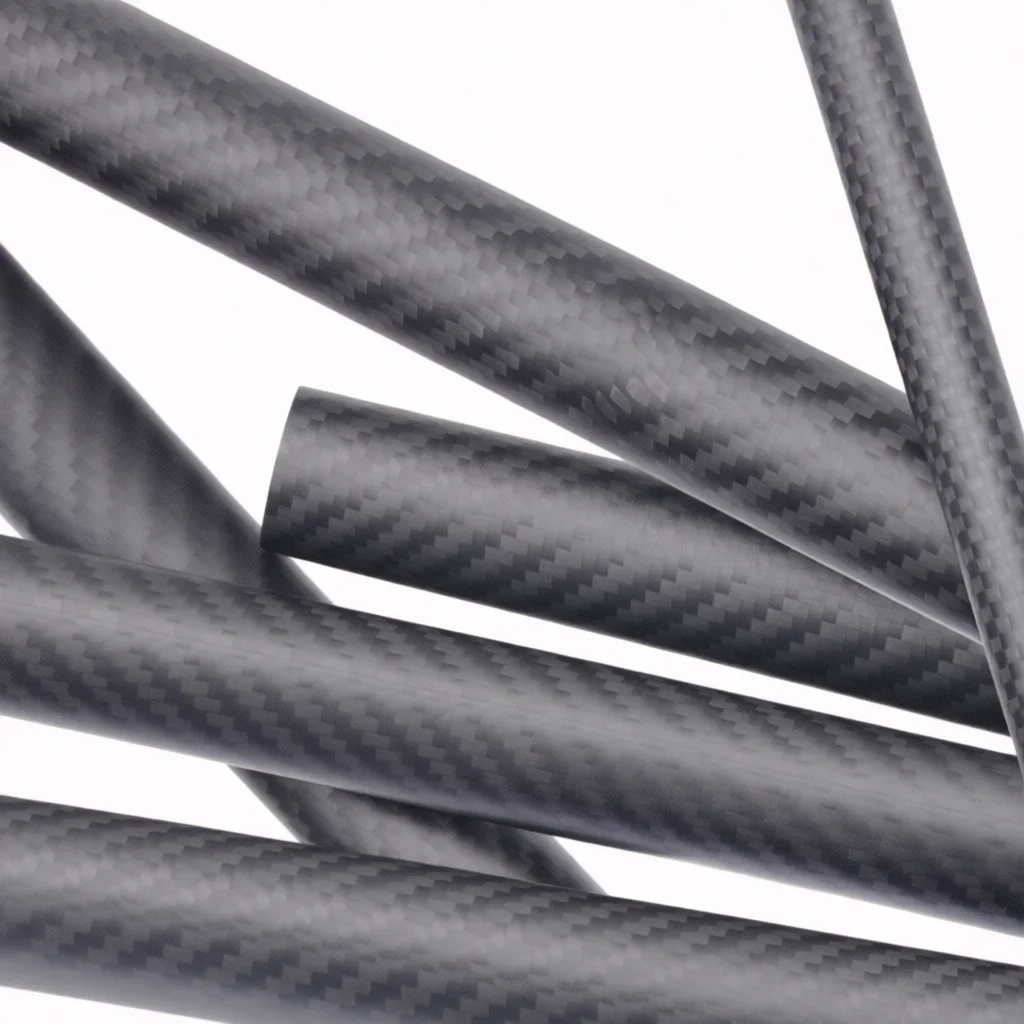
The engineering superiority of a high-performance Carbon Fiber Tube lies in its exceptional strength-to-weight ratio and customizable structural architecture. Unlike metals that exhibit identical physical properties in Tüm directions, carbon fiber reinforced polymers (CFRP) Tümow engineers to align continuous carbon filaments along specific load paths.
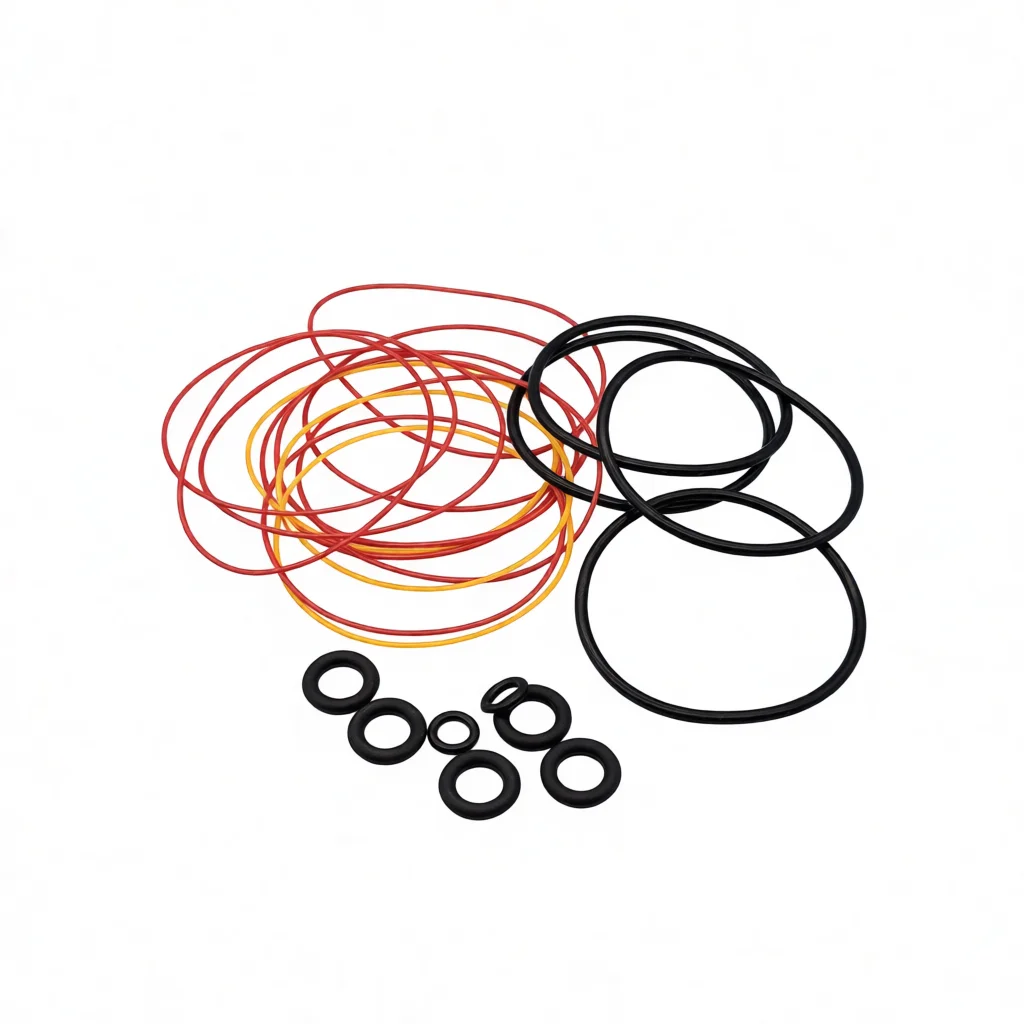
By varying the fiber orientation angle—such as combining 0° axial plies for maximum bending stiffness with ±45° plies for torsional rigidity and hoop strength—the structural response can be precisely tailored to the Başvuru. Furthermore, integrating advanced elastomeric interfaces or rubber-modified matrix resins into the composite layup significantly improves structural damping, isolating high-frequency harmonic vibrations that cause mechanical wear.
The table below contrasts the technical specifications of a standard Guangdong Sunlite high-modulus Carbon Fiber Tube against traditional engineering materials:
Engineering Metric | High-Modulus Carbon Fiber Tube | Aluminum Tümoy (6061-T6) | Structural Steel (A36) |
Density (g/cm³) | ~1.55 to 1.80 | 2.70 | 7.85 |
Tensile Strength (MPa) | 1200 to 2400+ (Directional) | 310 | 400 |
Tensile Modulus (GPa) | 135 to 230+ | 68.9 | 200 |
Coefficient of Thermal Expansion (10⁻⁶/K) | -0.5 to 1.2 | 23.6 | 12.0 |
Vibration Damping Capacity | High (Enhanced via co-cured layers) | Low | Very Low |
Corrosion & Chemical Resistance | Outstanding (Inert to hydrocarbons/salts) | Moderate (Prone to oxidation) | Poor (Requires coatings) |
Real-World Başvurus: Maximizing Throughput and Precision
1. High-Speed Robotic Automation and End-of-Arm Tooling (EOAT)
In modern fulfillment MERKEZs and manufacturing assembly lines, industrial robots operate at extreme cycle times with acceleration rates exceeding 4g. Utilizing heavy aluminum or steel profiles for long-reach robotic arms or pick-and-place grippers generates massive inertial forces. This inertia causes the robotic arm to overshoot its coordinates, requiring a programmed settling time before the Sonraki action can occur, which drasticTümy limits throughput.
By integrating a custom-engineered Carbon Fiber Tube into the EOAT framework, engineers reduce moving mass by up to 60%. The extreme specific stiffness ensures that the arm stops instantly without residual structural oscillation. This drop in dynamic inertia directly reduces the torque requirements on servo motors and gearboxes, lowering energy consumption and extending the service life of expensive electronic drive components.
2. Unmanned Aerial Vehicles (İHAs) and Defense Aerospace
Industrial inspection and defense drones require maximum flight endurance and stable payloads to capture clear sensor data. Structural components, such as airframe booms and folding arm systems, are constantly subjected to aerodynamic buffeting, motor vibration, and sudden thermal shifts.
Implementing a rigid Carbon Fiber Tube as the primary structural spine provides an ultra-lightweight chassis that directly translates into extended battery life and increased payload capacity. Because carbon fiber possesses a near-zero Coefficient of Thermal Expansion (CTE), the structural geometry remains perfectly stable when transitioning from freezing high-altitude environments to hot tarmac conditions. This dimensional stability Önsözents sensor misalignment and ensures consistent aerodynamic handling.
3. Industrial Drive Shafts and Conveyor Rollers
In chemical processing, paper mills, and printing plants, long rollers and power transmission shafts must operate continuously at high RPMs. Traditional metal rollers suffer from structural sag under their own weight, leading to eccentric rotation, bearing wear, and material tracking issues.
A large-diameter Carbon Fiber Tube acts as an ideal industrial roller or drive shaft. Its low mass raises the natural resonant frequency of the component well above the machine's operational RPM range, eliminating critical speed vibrations. This ensures ultra-smooth power transmission, protects secondary bearings from premature fatigue, and Önsözents web handling tearing or misalignment in automated processing lines.
SSS Section for Featured Snippets
Q1: Why is a carbon fiber tube preferred over aluminum for high-vibration engineering Başvurus?
A1: A carbon fiber tube is preferred because it delivers a significantly higher strength-to-weight ratio and superior internal material damping capacity compared to aluminum. Aluminum readily transmits structural harmonics and is prone to fatigue failure under cyclic loading, wBuradaas carbon fiber absorbs high-frequency vibrations and can be engineered with specific fiber layup orientations to eliminate mechanical resonance.
Q2: How does temperature change affect the dimensional stability of a carbon fiber tube?
A2: Unlike metals that expand or contract predictably with temperature fluctuations, a carbon fiber tube exhibits a near-zero or slightly negative coefficient of thermal expansion (CTE) along the axial direction of the fibers. This ensures that the tube maintains its precise physical length and structural alignment across extreme temperature differentials, Önsözenting thermal stress or calibration drift in precision systems.
Q3: Can a carbon fiber tube resist exposure to industrial chemicals and harsh environments?
A3: Yes, when fabricated with high-quality epoxy, vinyl ester, or thermoplastic matrix resins, a carbon fiber tube provides exceptional chemical resistance. It is compleTelevizyony immune to rust, galvanic corrosion, salt water, and a wide array of industrial hydrocarbons, making it vastly superior to steel and aluminum in corrosive chemical processing or marine environments.

Partner with Guangdong Sunlite Science & Technology Co., Ltd.
At Guangdong Sunlite Science & Technology Co., Ltd., we operate under a simple engineering philosophy: SmTüm ÜRÜN, Big Impact. We understand that a component as straightforward as a tube can dictate the efficiency, safety, and operational lifecycle of an entire industrial system.
We do not just supply off-the-shelf commodities; we collaborate as your dedicated engineering partner. From tailored fiber layups (0°, ±45°, 90°) to advanced composite-to-rubber vibration isolation assemblies, our technical team works alongside your design engineers to deliver optimized Çözümler that lower your Total Cost of Ownership.
Contact our technical sales team today to request material datasheets, discuss your custom Başvuru requirements, or arrange specialized sample testing for your Sonraki high-performance project.

In high-precision industrial engineering, the ultimate metric of success is systemic reliability under operational stress.